VAT basics cheat sheet for Kenyan businesses
VAT in plain language: who must register, the rate, taxable, zero-rated and exempt supplies, and the monthly return.

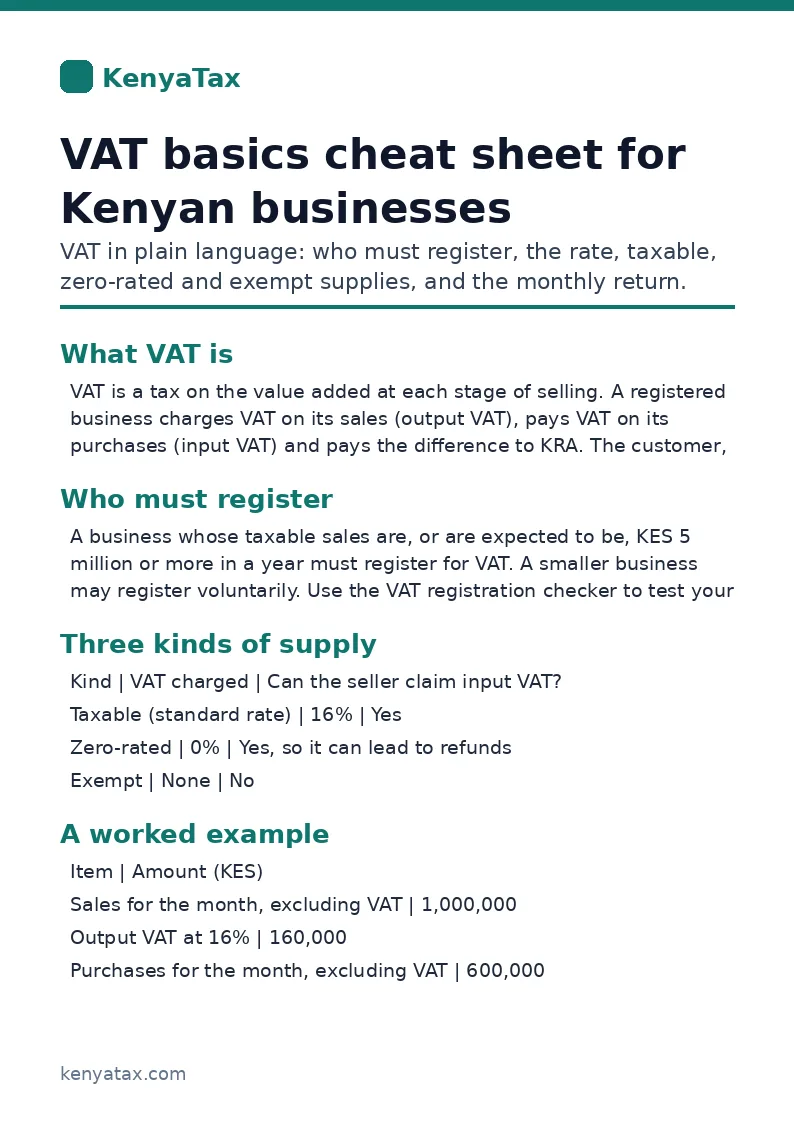
VAT confuses many small business owners. This cheat sheet explains it in plain language: what VAT is, who has to register, the standard rate, the difference between taxable, zero-rated and exempt supplies, how input and output VAT work with a worked example, and when the monthly return is due.
Small business owners approaching the VAT threshold, new bookkeepers and anyone who needs a quick VAT refresher.
What is included
- Plain-language explanation of VAT
- Registration threshold and who must register
- Taxable, zero-rated and exempt supplies
- Worked example of input and output VAT
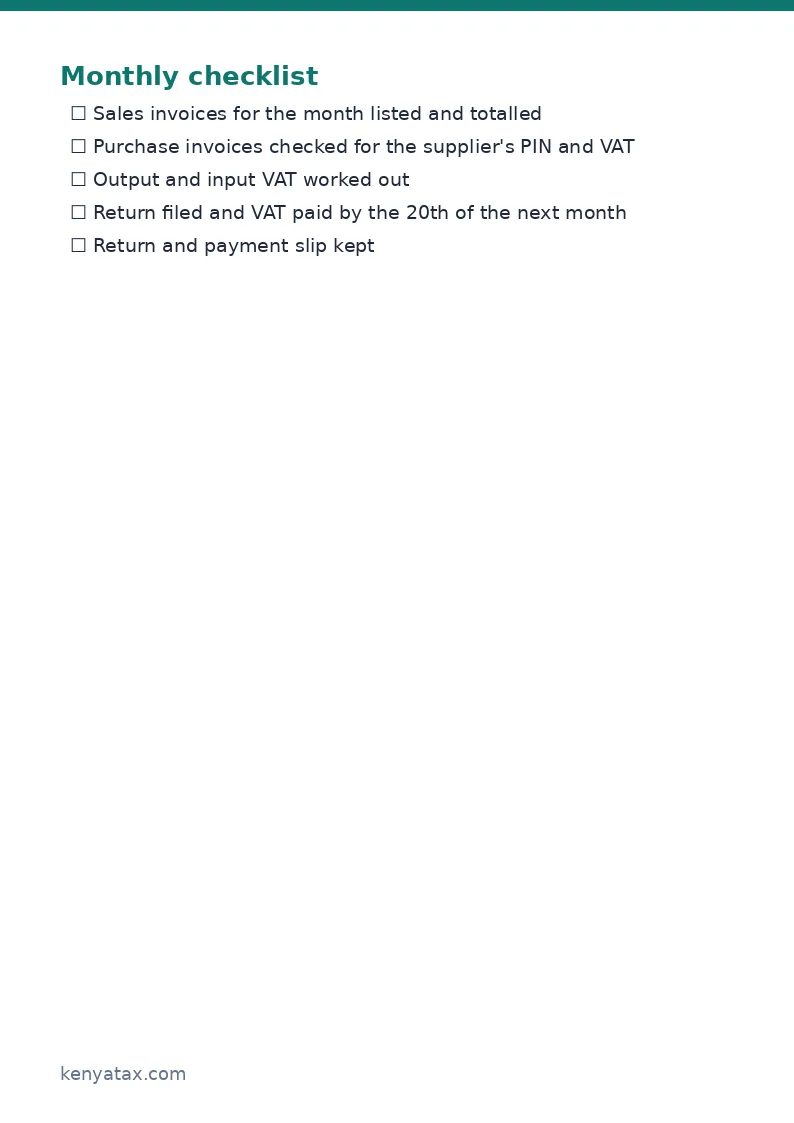
- Monthly return checklist
Advertisement
Screenshots
How to use it
- Read the sections in order.
- Check whether your sales are near the registration threshold.
- Work through the example with your own numbers.
- Use the checklist each month.
Templates are tools to help with your own records. They are not tax or legal advice. Check the figures against official sources before filing or paying.
Advertisement
More in this category
-
 Taxpdf
Tax audit survival guide
What to do when KRA announces an audit: the types, your rights, the documents to prepare and how to respond.
KES 1,080KES 1,200-10%
View details →
-
 Taxpdf
Rental income tax guide for landlords
Monthly rental tax or annual return? How landlords register, file, pay and keep records, with a worked example.
KES 720KES 800-10%
View details →
-
 Taxpdf
Withholding tax guide for Kenyan businesses
Who must withhold tax, on which payments, at what rates, and how to remit, issue certificates and keep records.
KES 720KES 800-10%
View details →
What the vat basics cheat sheet for kenyan businesses gives you
VAT confuses many small business owners. This cheat sheet explains it in plain language: what VAT is, who has to register, the standard rate, the difference between taxable, zero-rated and exempt supplies, how input and output VAT work with a worked example, and when the monthly return is due.
Who it is for
Small business owners approaching the VAT threshold, new bookkeepers and anyone who needs a quick VAT refresher.
How to use it
- Read the sections in order.
- Check whether your sales are near the registration threshold.
- Work through the example with your own numbers.
- Use the checklist each month.
- Keep a signed or dated copy with your records, so you can show what was agreed or done.
What is inside
- Plain-language explanation of VAT
- Registration threshold and who must register
- Taxable, zero-rated and exempt supplies
- Worked example of input and output VAT
- Monthly return checklist
The document is a ready-to-print PDF with these parts: What VAT is, Who must register, Three kinds of supply, A worked example, Monthly checklist. It is laid out for A4, with the headings, tables and tick boxes already in place, so you can print it and fill it in by hand, or type into it with a PDF editor.
Tips for getting it right
- Watch your sales every month against the threshold.
- Issue a proper tax invoice for every sale.
- Claim input VAT only with valid invoices.
- File on time even when there is nothing to pay.
Why it helps
Most tax trouble comes from late or missing records rather than from the tax itself. When the figures are collected as they happen, preparing a return becomes a matter of copying totals, not of searching for receipts. A workbook that follows the same layout as the return also makes it easier to spot a number that looks wrong before KRA does, and to explain it if asked.
Questions people ask
Can I edit it? It is a PDF, so it is meant to be printed and completed, or filled with a PDF editor. If you want to change the wording, copy the text into Word or Google Docs and adapt it to your business.
Is it legal advice? No. It is a practical starting point written for Kenya. Rules change, so check the current position and ask a professional where the stakes are high.
Will it work on my phone? Yes for reading. For filling in and printing, a computer or a PDF app works best.
Keeping it safe and up to date
Tax figures change with each Finance Act, so check the Rates sheet against KRA's current guidance before you file. Keep the supporting documents with the workbook, and keep each year's copy for at least five years in case KRA asks for proof.
Read the KRA filing calendar for small businesses for the wider picture. Free calculators that go with it: Vat calculator, Vat registration checker, Vat return calculator. See more tax templates or ask us for a custom one.
This document is general information, not tax, legal or accounting advice, and it is not affiliated with the Kenya Revenue Authority. If something does not work as described, contact us and we will put it right.
Related guides, calculators and templates
- Free calculator: VAT Calculator
- Free calculator: VAT Registration Threshold Checker
- Free calculator: VAT Return Calculator
- Guide: How to set up an M-Pesa till or Paybill for your business and account for it
- Guide: Tax on selling personal items and second-hand goods online
- Guide: Importing clothes and textiles: duty and classification
- Another template: VAT registration and monthly filing guide
- Another template: Turnover tax vs VAT comparison workbook
- Another template: VAT input and output register (up to 2,000 invoices)
Need something different? Request a custom template, browse all guides or see every Excel template.
Scroll inside the box to read more.